
Newsletter Subscribe
Enter your email address below and subscribe to our newsletter
Enter your email address below and subscribe to our newsletter

 ByJohn A
Graphic design combines creativity, communication, and technology. Whether you are creating a brand identity, social media graphic, website visual, or printed material, having the right skills and tools can improve both efficiency and results. For beginners, understanding the basic graphic design essentials is important because these fundamentals provide a foundation for developing a consistent visual style.
Designers may use many different tools throughout a project, but some are more important than others. From design software and typography to color and composition, each element contributes to the final result. For those who work with digital artwork, a best drawing tablet for graphic design can also provide greater control over lines, colors, and creative workflows.
One of the first graphic design essentials is a reliable computer. Modern design software can require considerable processing power, particularly when working with large files, detailed illustrations, or multiple layers.
A suitable computer should have enough RAM, storage, and processing performance for your regular software. A quality monitor is also valuable because accurate color representation is important for both digital and print projects.
Your physical workspace matters too. Good lighting, an ergonomic setup, and an organized desk can make long design sessions more comfortable and help you stay focused.
Software is another fundamental part of a designer’s toolkit. Different projects require different applications, so it is useful to understand several software categories.
Vector design programs are commonly used for logos, icons, and scalable illustrations. Raster-based software is better suited to photo editing, digital painting, and detailed image manipulation, while layout programs are useful for brochures, magazines, and other multi-page projects.
There’s no need to learn every program at once. Starting with one or two programs and learning essential functions such as layers, masks, paths, brushes, and selections is often more effective.
Typography is one of the most important graphic design essentials because text often plays a central role in visual communication. The right typeface can influence both the appearance and readability of a design.
Designers should understand serif and sans-serif fonts as well as concepts such as hierarchy, spacing, alignment, and contrast. Font size and line spacing are particularly important for maintaining readability.
Using too many typefaces can make a project feel inconsistent. A small combination of complementary fonts is often enough to create a clear visual hierarchy.
Color can communicate emotion, establish brand recognition, and guide attention. As a result, color theory belongs among the fundamental graphic design essentials.
Designers should understand hue, saturation, brightness, complementary colors, and analogous color schemes. It is also important to know the difference between RGB and CMYK. RGB is generally used for digital displays, while CMYK is commonly used for print.
A consistent color palette can make a design look more professional. Designers should also pay attention to contrast and accessibility so that important information remains easy to see.
Effective design is not simply about adding attractive elements. Their arrangement determines how viewers understand and interact with the visual.
Composition is therefore one of the key graphic design essentials to practice. Balance, alignment, proximity, repetition, contrast, and white space can help organize information and prevent a design from becoming overwhelming.
Visual hierarchy is equally important. Differences in size, weight, color, and position can guide viewers toward the most important information before they move to supporting details.
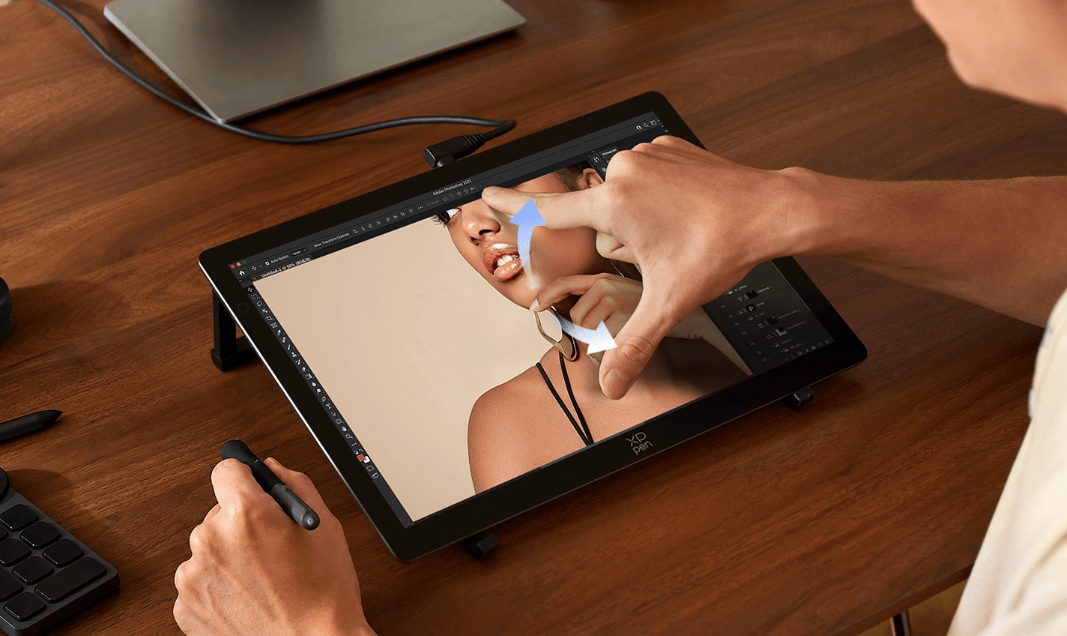
For designers who create illustrations, concept artwork, hand-drawn elements, or detailed retouching, a drawing tablet can be a useful addition to their graphic design essentials.
Compared with a traditional mouse, a pen tablet or drawing display provides more natural control over strokes. Pressure sensitivity can also help create variations in line thickness and opacity.
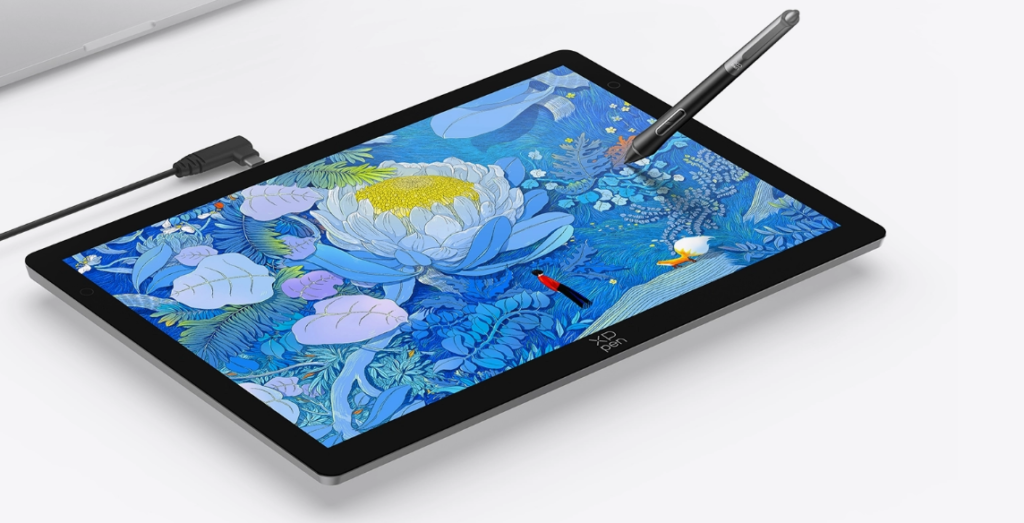
The XPPen Artist Ultra 14 is one example of a portable drawing display designed for digital creative work. It features a 14-inch 2.8K OLED display, native 10-bit color depth, and a 99% Adobe RGB color gamut for detailed visuals and smooth color transitions. Its slim design also makes it convenient for designers who want a portable creative setup.
The best device, however, depends on the designer’s workflow, budget, software, and project requirements rather than simply having the most advanced specifications.
Another often-overlooked part of graphic design essentials is asset organization. Designers may work with hundreds of images, icons, fonts, and project files, making a consistent file-management system extremely useful.
Clearly named folders and files can save time and make projects easier to maintain. It is also helpful to separate original working files from exported versions and keep backups of important projects.
Copyright should not be ignored either. Images, fonts, illustrations, and other external resources should be checked for licensing requirements before being used commercially.
Creative work benefits from research. Looking at existing visual styles, competitors, design trends, and audience preferences can help designers make more informed decisions.
Building an inspiration library is one practical way to improve visual awareness. Designers can collect examples of typography, packaging, layouts, illustrations, and color combinations.
The goal is not to copy existing work but to understand why certain designs are effective and apply those principles in an original way.
Technical skills alone are not enough. Communication is another important part of the graphic design essentials, especially when working with clients, marketing teams, or developers.
Before starting a project, designers should understand its purpose, target audience, required deliverables, technical specifications, and visual direction. Asking questions early can reduce unnecessary revisions later.
Designers should also be able to explain their creative choices clearly and connect them to the project’s objectives.
Understanding file formats is another practical skill. Different projects require different formats depending on how the final design will be used.
PNG can be useful when transparency is required, JPEG is common for photographs, SVG works well for scalable vector graphics, and PDF is widely used for sharing and printing finished designs.
For print projects, designers should also understand resolution, bleed, dimensions, and color modes. These technical details can help prevent quality problems during production.
The final part of the graphic design essentials is a willingness to keep learning. Design software, technologies, and visual trends continue to evolve, so designers need to update their skills over time.
Regular practice can improve typography, composition, drawing, and visual problem-solving. Personal projects are also a useful way to experiment with unfamiliar techniques without the limitations of a client brief.
Feedback is equally valuable. Reviewing work with other designers or clients can reveal weaknesses and help develop stronger design judgment.
Not every designer needs the same tools. A branding designer may prioritize vector software and typography, while an illustrator may place greater importance on a drawing display and digital painting software.
A practical approach is to start with the graphic design essentials that directly support your current projects. A capable computer, suitable software, quality display, and a solid understanding of typography, color, and composition provide a strong foundation.
As your skills and project requirements grow, you can gradually add specialized tools and equipment instead of purchasing everything at once.
Effective graphic design requires more than creativity. The right combination of technical knowledge, visual principles, software, hardware, organization, and communication skills can make the creative process more efficient and the final work more effective.
Understanding these graphic design essentials gives beginners a practical starting point while helping experienced designers improve their workflows. Rather than collecting every available tool, focus on building a toolkit that supports the type of design work you actually want to create.
